
Getting your experts on camera without wasting their time
Your physicians, researchers and executives carry your credibility, and they have no time. How to plan a shoot that respects their schedule and still gets great material.
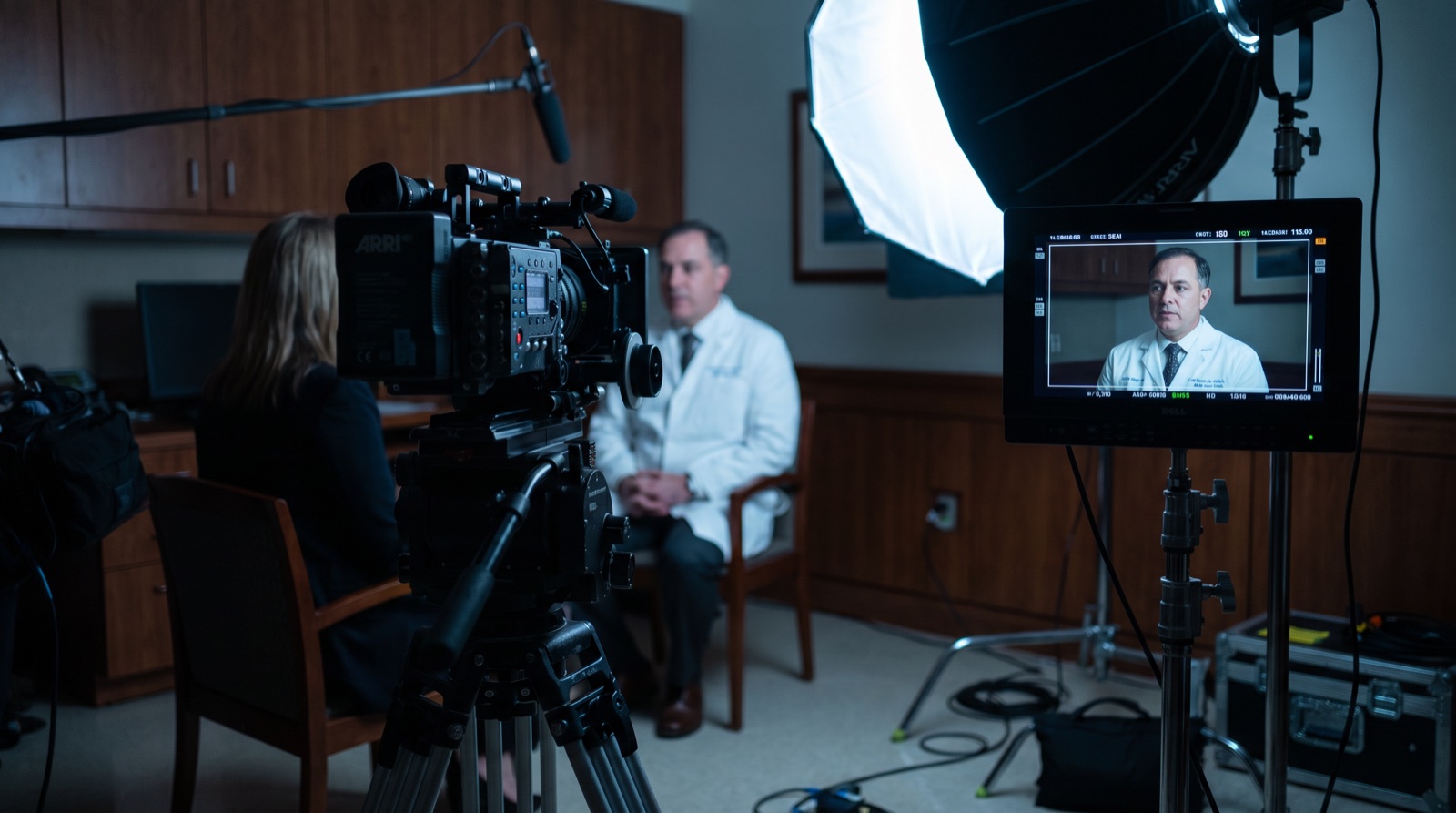
The most credible voice in your organisation is usually the busiest person in it. A physician between patients, a researcher between experiments, a founder between meetings. You need them on camera, and they can give you an hour at most. At Lumen, we plan every expert shoot around that hour.
The good news is that an hour is enough, if the planning is done before they arrive.
Ask for less time, and mean it
When you ask for "a morning", people say no or postpone. When you ask for forty five minutes, with a clear start and end, they say yes. Plan the day so each person is in and out in the time you promised.
Send the questions ahead, not a script
Most experts speak better when they talk naturally than when they read. Send the topics and questions a few days before, so they can think about their answers, but do not ask them to memorise lines. Where exact wording matters, a teleprompter can help for a short passage.

Brief them in plain language
Tell each person who the film is for, why their voice matters and how the material will be used. Experts relax when they understand the purpose, and they give better answers when they know the audience is not other experts.
Set up before they arrive
Lighting, cameras and sound should be ready and tested before the first person sits down. Nothing wastes an expert's time faster than waiting while equipment is adjusted.
When several people are filmed on the same day, use one setup for all of them. Everyone looks consistent, and each person spends their time talking rather than waiting.
Get more than one film from each session
One well planned conversation can produce a main film, a short highlight for each person, and clips for social channels. Plan those uses before the shoot so the questions cover all of them.
Make it easy to say yes again
Thank people, send them their clips, and show them where the film is used. Experts who enjoyed the experience and saw the result are far more willing to do it again, and to recommend colleagues.

Planning checklist
- A clear time slot for each person, and keep to it
- Questions sent ahead, with the purpose of the film
- A short, plain briefing on who will watch
- Equipment set and tested before the first arrival
- One setup for everyone filmed on the day
- A list of every film and clip the session should produce
- A thank you and their clips afterwards
More from the journal.
How to explain your technology in two minutes
Investors, partners and boards give you two minutes before they decide whether to keep listening.
How to brief a film about complex work
What to send, who to bring and what to decide before the first call.
How to tell if your video is working
Views are the easiest number to find and the least useful.
Complexity, made clear.
Tell us the audience, the goal and the deadline. A white paper, a deck or a fifteen minute call is usually enough to scope it.
Book a scoping call hello@lumennarrative.com