

Universities

Film production for universities and research.

Research explainers, faculty films, campaign films and public installations for universities, colleges and research institutes. Built so research reaches the public, funders and students, not only a journal.

Lumen Narrative is a Toronto film production company for universities, colleges and research institutes. We turn research into films and installations that the public, funders and students actually watch, from research explainers and faculty profiles to campaign films for the institution itself.

University video production has many approvers and a fixed calendar. We plan around both: one point of contact, an approval route agreed up front, and shoots scheduled around teaching. Scripting, filming, motion, sound and finishing happen in house, with captions and transcripts as standard.

From the lab to the lecture hall.

A university speaks to researchers, students, donors and the public at once. Each needs a different film.

01

Research communication

A paper or a set of results built into a film or installation a non expert follows.

02

Faculty and program films

Faculty on camera, explaining their work and their program in their own words.

03

Recruitment and admissions

Films that show prospective students what studying and researching there actually looks like.

04

Advancement and fundraising

Campaign and donor films that make the case for a building, a chair or a research program.

05

Research institutes and centres

Brand and explainer films for centres whose work crosses disciplines and audiences.

06

Public installations and exhibitions

Research that leaves the screen: installations and exhibition media built for a person walking past.

Research has to reach people, not only journals.

Academic work comes with its own calendar, its own approvers and its own audiences. These four shape how we produce for it.

i.

Research has to reach people

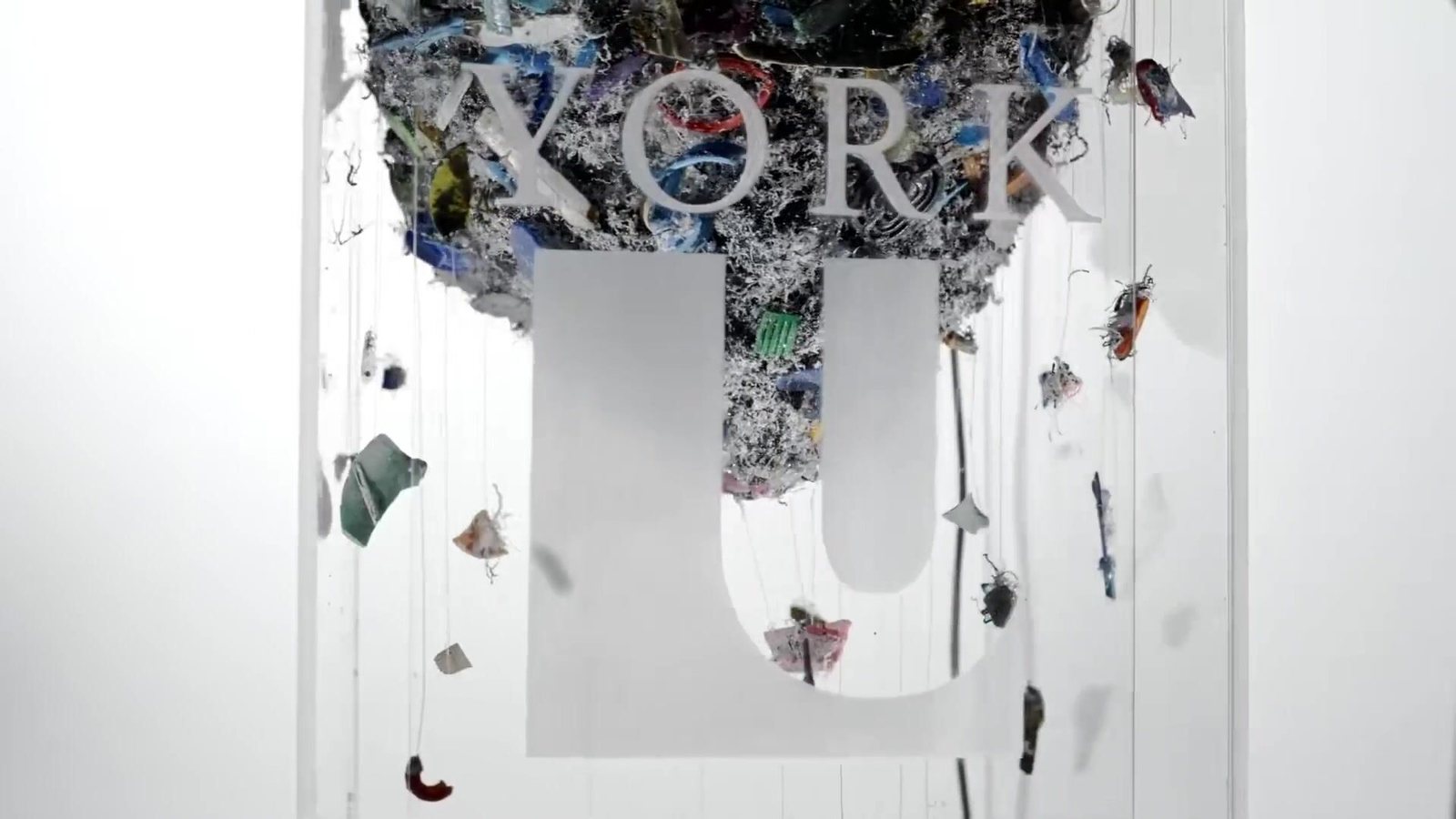
A lecture is the wrong format for someone walking past. For York University, Dr. Shooka Karimpour's microplastics research became a public installation built to stop people and hold them.

ii.

Faculty schedules and teaching terms

Faculty time is set by the term, not by the production. We plan shoots around teaching and keep each person's time on camera short.

iii.

Many approvers

Communications, the faculty and sometimes legal all sign off. We agree the approval route at the start and keep every note on the frame in Frame.io, tracked until it is closed.

iv.

Accessible by default

Captions and transcripts come with every deliverable, so the film works for every viewer from the first upload.

Abstract iridescent glass discs

Research that stops someone walking past.

Research explainers and installations that take a study off the page. For York University we were technical producer and location manager, providing the facilities, equipment and lighting behind a two part installation: two plinths, each a miniature classroom of 300 printed students, on a base built from plastic collected from the beach.

  • Research explainers built from the paper and the researcher
  • Installation and exhibition media, including working displays
  • Motion graphics and data visualization for methods and results
  • Captions and transcripts on every deliverable

Research in public. Experts on camera.

All work

Directed by Justin PoulsenPublic installation

York University

Micro-Lectures on Microplastics · Research communication
The problem
Dr. Shooka Karimpour's research on microplastics needed to reach the public, not only a journal. A lecture is the wrong format for a person walking past.
What we made
A two part installation: two plinths, each a miniature York classroom with 300 three dimensionally printed students, a working screen playing the full lecture, and a base built from beach plastic.
Why it works
The medium argues the point: the audience looks at the waste while listening to the research about it. Our role: technical producer and location manager, with the facilities, equipment and lighting the director worked with.
Campaign content

Ontario College of Family Physicians

Physician films · KOL and leadership films
The problem
For World Family Doctor Day the College needed real physicians on camera, while asking as little time as possible of doctors who have none to spare.
What we made
A multi camera interview production that captured several physicians in one controlled block, cut into the main campaign films, physician highlight pieces and short social cuts, with full transcripts.
How it applies
Not a university project, but faculty films face the same limit: experts with little time. Each physician gave an hour, and one block yielded a whole campaign.

Built around the academic calendar.

One point of contact, one approval route, and shoots set around teaching rather than through it.

01

Discovery

The paper, the lab and time with the researcher. The facts are right before a word is written.

02

Script and approvals

Outline, then script, then sign off from communications and faculty. Nothing is filmed before it.

03

Scheduling

Shoots planned around teaching and the people who need to be on camera.

04

Production

Filming, motion graphics and installation media, produced in house.

05

Review on the timeline

Rounds agreed up front. Notes land on the frame in Frame.io and are tracked to close.

06

Delivery and every cut

Master, web, social and event versions. Captions, transcripts and source files included.

University video production, answered.

Can you turn a research paper into a short film?
Yes. We read the paper, spend time with the researcher and build a script a non expert can follow, approved before anything is shot. Motion graphics and data visualization show the methods and results where a camera cannot, and the researcher can carry the story on camera.
Do you film lectures and events?
Yes. We record lectures, panels and keynotes with multi camera setups and broadcast audio, then cut the full recording alongside short highlights for the web and social. Captions and transcripts are included.
How do you work with faculty schedules?
We plan around the term. Shoots are booked around teaching, several faculty can be filmed in one block, and each person's time on camera is kept short. One point of contact coordinates with your communications team so faculty only join where they are needed.
Do you provide captions and transcripts?
Yes, on every deliverable. Captions and transcripts are part of delivery, alongside versions for the web, social, events and archive, all cut from the same master.
Can you produce installations, not only videos?
Yes. For York University we were technical producer and location manager on Micro-Lectures on Microplastics, providing the facilities, equipment and lighting behind a two part public installation with a working display playing the full lecture inside a miniature classroom. Research communication does not have to mean a video on a website.
Where are you based?
Toronto, Ontario. Lumen Narrative works with universities, colleges and research institutes across Canada and the United States, alongside life sciences, healthcare and technology organizations.

Bring us the research.

Tell us the audience, the goal and the deadline. A paper, a brief or a fifteen minute call is usually enough to scope it.

Book a scoping call hello@lumennarrative.com